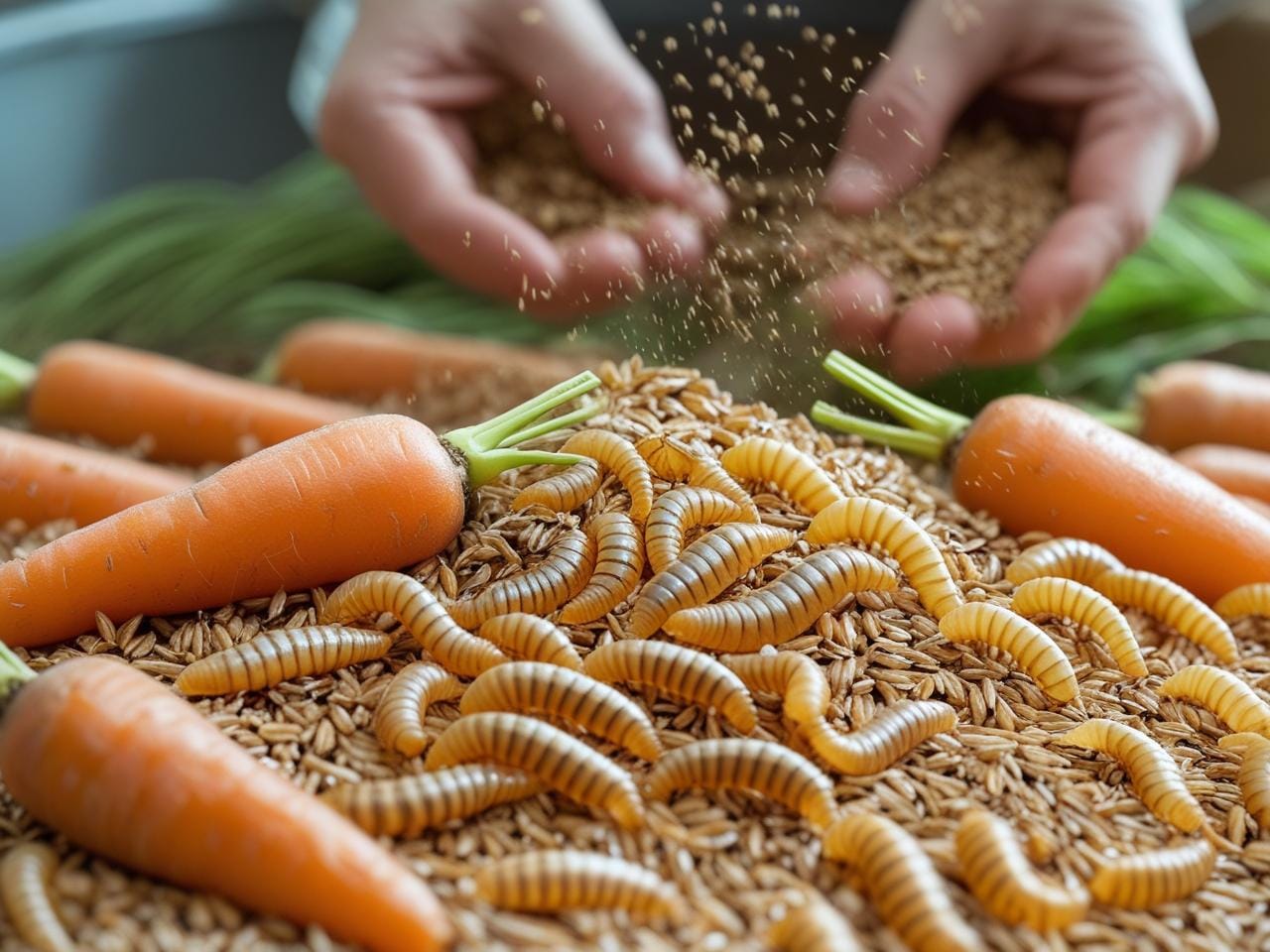
Discover what mealworms eat, from grains to protein boosts. Improve growth, reproduction, and nutrition for farming and pet feeding.
Mealworms have been valued for centuries as a nutritious, sustainable, and versatile feed source for animals and even, increasingly, for humans. Whether you are a farmer raising chickens, a reptile keeper, a fish breeder, or a hobbyist cultivating mealworms for sustainability projects, the key to success lies in understanding the mealworm diet. A carefully balanced meal for meal worms not only ensures rapid growth and reproduction but also enhances their nutritional profile for the animals that consume them.
This complete guide explores everything from the natural diet of mealworms in the wild to homemade feeding recipes, commercial feed comparisons, feeding guidelines, and troubleshooting problems. Along the way, we’ll also highlight sustainable practices and provide clear insights into how mealworm nutrition directly impacts their value as animal feed.
Introduction to Meal Worms and Their Diet
What Are Meal Worms?
Mealworms are the larval stage of the darkling beetle (Tenebrio molitor). They are widely recognized for their high protein, fat, and micronutrient content. Typically ranging from 1 to 2.5 cm during the larval stage, mealworms are golden-brown, segmented, and cylindrical.
They pass through four life stages:
Egg – tiny, white, and oval-shaped.
Larva (mealworm) – the most sought-after stage for feed.
Pupa – transitional, non-feeding stage.
Adult beetle – dark brown to black, responsible for reproduction.
Farmers and pet owners primarily raise the larval stage for its high nutritional value. Mealworms thrive when provided with the right diet, and their diet significantly influences their growth rate, reproduction, and the quality of nutrients they pass on to pets, poultry, reptiles, and fish.
Importance of Proper Nutrition for Meal Worms
Feeding mealworms properly is not just about keeping them alive. Their diet determines:
Growth speed – A balanced diet shortens the larval development cycle.
Nutrient density – Well-fed mealworms contain more protein, fat, and minerals.
Reproductive health – Adult beetles fed nutrient-rich diets lay more eggs.
Survivability – Proper hydration and fiber reduce die-off in colonies.
Inadequate or imbalanced feeding often leads to slow growth, nutrient deficiencies, weak pupae, reduced egg production, and high mortality.
Natural Diet of Meal Worms in the Wild
In the wild, mealworms are opportunistic feeders. They are often found in stored grain products, barns, decaying vegetation, and other organic matter. Common natural food sources include:
Grains – cracked corn, wheat, oats.
Vegetable matter – decaying carrots, potatoes, leafy greens.
Organic waste – fungi, plant debris, and animal feed leftovers.
By mimicking this diverse, natural diet in captivity, we can raise stronger, healthier colonies.
Understanding Meal Worm Nutrition
Essential Nutrients for Healthy Meal Worms
Mealworms, like all organisms, require a balanced mix of macronutrients and micronutrients to grow and thrive.
Proteins and Amino Acids
Proteins are the building blocks for muscle, exoskeleton development, and reproduction. Mealworms require a diet that provides essential amino acids such as lysine and methionine. Protein-rich foods like soy meal, egg powder, and fish meal boost growth and reproductive output.
Carbohydrates and Fiber
Carbohydrates are the primary energy source. Bran, oats, and wheat middlings provide slow-release energy. Fiber, though not directly digestible, aids in gut health and prevents compaction in their digestive system.
Vitamins and Minerals
Calcium – critical for exoskeleton hardening.
Magnesium & Iron – aid in metabolic functions.
Vitamin A, D, and E – support reproduction and growth.
B-complex vitamins – improve metabolic efficiency.
A deficiency in vitamins and minerals often results in weak larvae, poor molting, and higher mortality.
How Diet Affects Meal Worm Growth and Development
The diet determines whether mealworms reach their full size potential of 2.5 cm or remain stunted.
High-protein diets accelerate growth but must be balanced with carbohydrates.
Excess fat diets may cause sluggish activity and high mortality.
Moisture-rich foods like carrots and potatoes prevent dehydration but must be controlled to avoid mold.
A carefully balanced diet can reduce the larval stage from 12 weeks to as little as 8 weeks, meaning faster production cycles for farmers.
Best Food Sources for Meal Worms
Grains and Cereals (Oats, Bran, Wheat)
Grains form the foundation of mealworm diets. They provide carbohydrates, fiber, and some protein.
Wheat bran – the most popular substrate and feed.
Oats – excellent energy source.
Cornmeal – adds variety and boosts fat content.
Grains are typically used both as bedding and food for convenience.
Vegetables and Fruits (Carrots, Potatoes, Apples)
Vegetables serve two purposes: hydration and micronutrients.
Carrots – provide moisture, beta-carotene, and prevent dehydration.
Potatoes – long-lasting hydration source.
Apples & pears – nutrient-rich but prone to mold, requiring caution.
Avoid citrus fruits, as they may cause digestive issues.
Protein-Rich Foods (Soy, Fish Meal, Egg Powder)
To boost protein levels:
Soybean meal – widely used and affordable.
Fish meal – rich in essential amino acids.
Egg powder – excellent for boosting reproduction.
These foods should be used as supplements, not sole diets, since excess protein can lead to colony stress.
Hydration Sources for Meal Worms
Mealworms do not drink water directly. Instead, they obtain hydration from:
Moist vegetables (carrots, potatoes, cucumbers).
Gel-based hydration blocks.
Always avoid free water sources, as they cause drowning and mold outbreaks.
Commercially Prepared Meal for Meal Worms
Advantages of Store-Bought Meal Worm Feeds
Balanced formulation – precise protein, carb, and mineral ratios.
Convenience – less preparation time.
Consistency – predictable growth and yield.
Top Brands and Recommended Products
Popular options (depending on region) include:
Pre-mixed bran blends.
Specialized insect-rearing feeds.
High-protein poultry supplements usable for mealworms.
Homemade vs. Commercial Meal Comparison
Homemade – cheaper, customizable, requires more effort.
Commercial – easier, balanced, but more costly.
Farmers often use a hybrid approach, combining bran (homemade) with commercial protein boosters.
DIY Meal for Meal Worms (Homemade Recipes)
Basic Ingredients to Include
Bran or oats (base).
Vegetables (hydration).
Protein supplements (soy, egg powder).
Calcium powder (for exoskeleton support).
Step-by-Step Guide to Preparing Meal Worm Feed
Layer wheat bran in container.
Add small amounts of ground soy or egg powder.
Provide fresh vegetable slices (replace every 48 hrs).
Sprinkle mineral/vitamin powder lightly.
Cost-Effective Feeding Solutions
Use leftover vegetable peels (non-citrus).
Collect grain by-products from mills.
Repurpose unsold bread or cereals (avoid moldy items).
Feeding Guidelines and Best Practices
How Much to Feed Meal Worms
Mealworms eat roughly 5-10% of their body weight daily. Always maintain enough substrate for both bedding and feeding.
Feeding Frequency and Schedules
Replenish grains every 5-7 days.
Replace vegetables every 2 days.
Maintaining Clean Feeding Containers
Remove moldy food immediately.
Separate dead larvae and pupae.
Sift and refresh substrate every 4–6 weeks.
Common Mistakes to Avoid in Feeding Meal Worms
Overfeeding vs. Underfeeding
Overfeeding – causes mold, mites, waste.
Underfeeding – stunts growth, increases cannibalism.
Using Moist or Mold-Prone Foods
Avoid lettuce, citrus, and overly wet fruit, as they rot quickly.
Ignoring Nutrient Balance
A diet of only bran leads to slow growth and nutrient-poor larvae. Always add variety.
Impact of Meal Worm Diet on Pets & Farming
How Meal Worms’ Diet Affects Chickens
Chickens fed mealworms raised on protein-rich diets lay larger, more nutritious eggs.
Nutritional Value of Meal Worms for Reptiles and Fish
Reptiles – benefit from calcium-rich mealworms.
Fish – thrive on mealworms with balanced protein and fat.
Meal Worm Farming for Animal Feed Production
Commercial farming requires consistency. Feeding balanced diets ensures uniform size and higher yields.
Sustainable Feeding Practices for Meal Worms
Eco-Friendly Ingredients
Use agricultural by-products, vegetable scraps, and organic grains to minimize waste.
Reducing Waste in Meal Worm Farming
Compost frass (insect waste) as fertilizer.
Rotate vegetables to minimize spoilage.
Troubleshooting Meal Worm Feeding Problems
Why Meal Worms Refuse Certain Foods
They may reject foods due to bitterness, high acidity, or chemical residues.
Dealing with Mold or Rot in Feed
Keep ventilation high.
Remove uneaten moist foods quickly.
Ensuring Proper Hydration Without Over-Moisture
Use firm vegetables like carrots or potatoes rather than watery ones like lettuce.
FAQs About Meal for Meal Worms
What is the best food for meal worms?
A mix of wheat bran, oats, soy protein, and carrots works best.
Can meal worms eat kitchen scraps?
Yes, but avoid citrus, salty, or moldy scraps.
How do I keep meal worm food from molding?
Use small portions of vegetables and increase airflow.
How often should meal worms be fed?
Every 2–3 days for moist foods, weekly for grains.
What foods are toxic to meal worms?
Citrus fruits, onions, garlic, and highly processed foods.
Do meal worms need supplements?
Yes, calcium and vitamin powders improve their nutritional profile.
Conclusion: Building the Perfect Meal for Meal Worms
Raising healthy mealworms is not complicated, but it requires balance, consistency, and careful feeding practices. By providing the right mix of grains, vegetables, protein, vitamins, and hydration, mealworms grow faster, live longer, and provide superior nutrition for the animals that depend on them.
Whether you choose a homemade recipe or commercial feed, remember: the meal for meal worms ultimately determines the success of your colony and the quality of nutrition passed up the food chain.